Leela Corman
Painterly cartoonist whose watercolor graphic novels explore Jewish identity, women's history, and collective trauma — with three 2025 Eisner Award nominations for Victory Parade.
📍 Providence, Rhode Island
Leela Corman was born in 1972 in Massachusetts and grew up in Manhattan during the 1980s — riding the subway past Keith Haring’s chalk drawings, using her bus pass to sneak into CBGBs, and absorbing the city’s raw creative energy. Her grandmother taught her Yiddish, which became a recurring thread in her work, and her family’s Polish-Jewish history — her grandfather lost family in the Holocaust — gave her an early, intimate understanding of generational trauma. She studied painting, printmaking, and illustration at the Massachusetts College of Art, then self-published her first comic, Queen’s Day (1999), on a Xeric Grant.
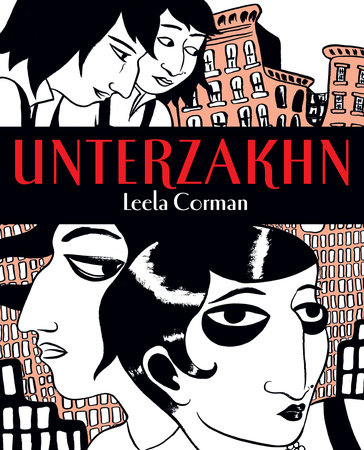
Corman’s major breakthrough came with Unterzakhn (Schocken/Pantheon, 2012), the first book in her New York trilogy. The graphic novel follows twin sisters — one who becomes a birth-control provider for poor immigrant women, the other a sex worker and showgirl — growing up in the tenements of the Lower East Side at the turn of the 20th century. Schocken editorial director Altie Karper acquired it after spotting Corman’s comics in Lilith magazine. “It was Persepolis, but with Jewish girls on the Lower East Side,” Karper said. Unterzakhn was nominated for an Eisner Award, the LA Times Book Prize, and France’s Prix Artemisia, and won the MoCCA Arts Festival Award of Excellence.
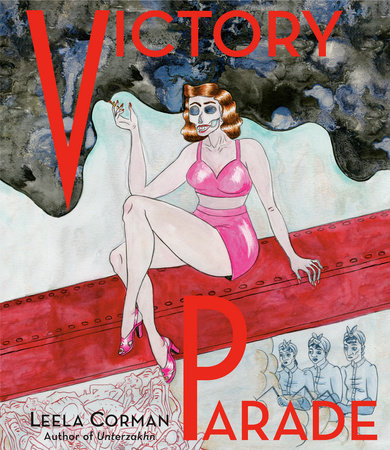
The long-awaited second volume of the New York trilogy, Victory Parade (Schocken, 2024), elevates Corman’s craft to new heights. Set in 1944 Brooklyn, it follows two Jewish women: Rose, who works at a parachute factory while her husband fights overseas and slips into an affair with a wounded veteran; and Ruth, a German refugee orphan who channels her rage into becoming a lady wrestler called “Ruthless Ruby, the Killer Kraut.” The book cuts between the factory floor, the wrestling ring, the astral plane over Buchenwald, and the Roosevelt-era funeral of the legendary Yiddish actress Molly Picon — all painted in Corman’s signature watercolor-and-gouache style, directly referencing the “degenerate” art of Otto Dix that the Nazis banned. Publishers Weekly called it “the finest work yet from an always formidable artist” in a starred review, and it was named one of the Best Graphic Novels of 2024 by the Washington Post, NPR, Publishers Weekly, and The Guardian.
Corman’s short comics have appeared in The Believer, Tablet Magazine, The Nib, and Nautilus, and she has created art for The New York Times, album art for the Mountain Goats, and tour posters for Neko Case. She is married to cartoonist Tom Hart (founder of the Sequential Artists Workshop) and lives in Providence, where she teaches at RISD. Her third New York trilogy book is forthcoming.
Perfect for fans of Art Spiegelman’s Maus, Marjane Satrapi’s Persepolis, and Alison Bechdel’s Fun Home — graphic novels that use the full expressive range of comics to confront history, trauma, and survival.
Explore Leela Corman’s comics: Victory Parade, Unterzakhn.