Jim Rugg
Eisner and Ignatz Award-winning cartoonist known for Street Angel, Afrodisiac, Supermag, and Octobriana 1976. A master of retro-pop pastiche, graphic design, and DIY comics craftsmanship.
📍 Pittsburgh, Pennsylvania
Jim Rugg makes comics that feel like they’ve been beamed in from a parallel dimension—one where the newsstand racks never stopped spinning, where faded four-color printing and ballpoint pen doodles share equal space, and where a homeless twelve-year-old skateboarding ninja is the toughest hero in town. Over two decades, this Pittsburgh-based cartoonist, designer, and educator has built a body of work that ricochets between loving pop-culture pastiche and boundary-pushing graphic design, all while keeping one foot firmly planted in the DIY ethos of self-publishing.
From Mini-Comics to Cult Stardom
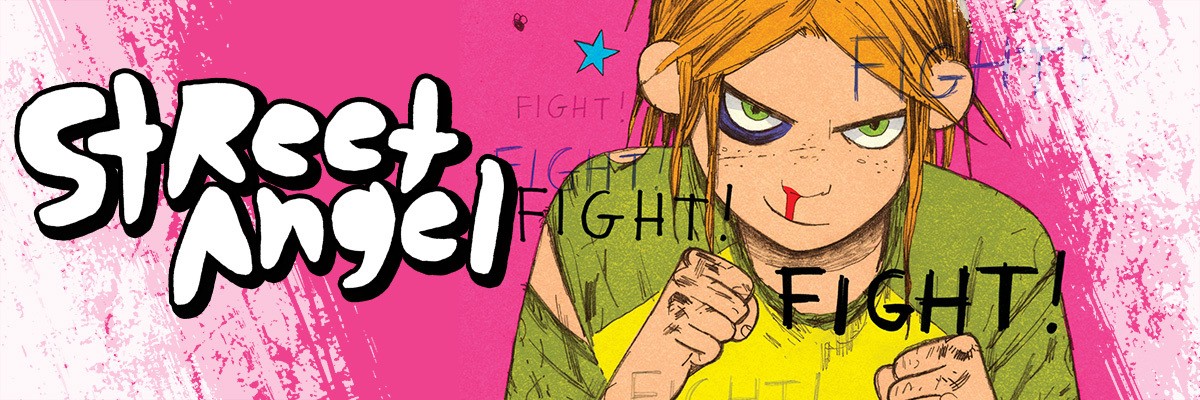
Rugg grew up in Connellsville, Pennsylvania, buying his first comic at age ten—Wolverine #10, drawn by John Buscema and Bill Sienkiewicz. After earning a BFA in graphic design from Indiana University of Pennsylvania, he spent years as a graphic designer before breaking into comics the old-fashioned way: printing mini-comics and selling them at conventions. The first of those mini-comics was Street Angel, a scrappy punk-rock story about a homeless teenage skateboarding ninja named Jesse Sanchez, co-created with writer Brian Maruca. It sold out at its debut at the SPACE convention in Columbus, Ohio, and Slave Labor Graphics quickly snapped it up for a five-issue series and a trade paperback. “All I wanna do is see Street Angel punch people, forever,” said cartoonist Eleanor Davis—capturing the feral energy that turned this fringey mini-comic into a genuine indie institution.
After Image Comics revived the series in 2017 with a run of oversized full-color hardcovers—Street Angel: Princess of Poverty, The Street Angel Gang, Street Angel: Superhero For A Day, Street Angel Goes to Juvie, Street Angel vs Ninjatech, and the collection Street Angel: Deadliest Girl Alive—the character’s cult following only grew. Today, Street Angel remains Rugg’s signature creation: a punk-rock superhero who defies female stereotypes, fights injustices one bad guy at a time, and refuses to be anything less than her completely unhinged, totally lovable self.
The Pastichiste Supreme
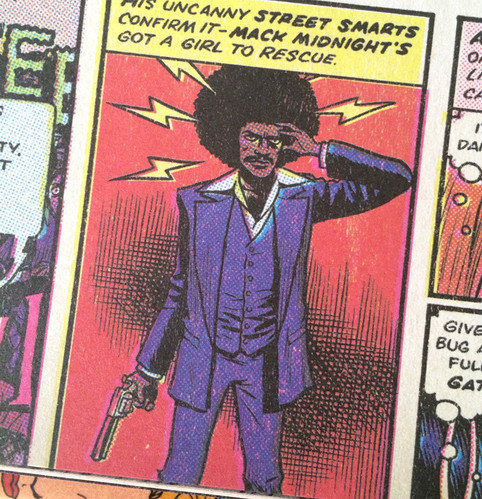
In 2009, Rugg and Maruca reunited for Afrodisiac, a graphic novel published by AdHouse Books that remains one of the most breathtakingly executed pastiches in comics history. It channels 1970s blaxploitation cinema, Marvel Comics excess, kung fu movies, space aliens, dinosaurs, Dracula, and Richard Nixon into a single artifact that Publishers Weekly called “thoroughly entertaining and utterly nutso.” Every page replicates the faded four-color printing, misregistered plates, wrinkled covers, and dot-pitch color of actual newsstand comics from the ’70s—it’s not just a comic, it’s an archaeological artifact from a timeline where the 1970s got even weirder. The book earned a 2011 Eisner Award nomination for Best Humor Publication, an AIGA 50 Books/50 Covers award, and multiple Glyph Award nominations.
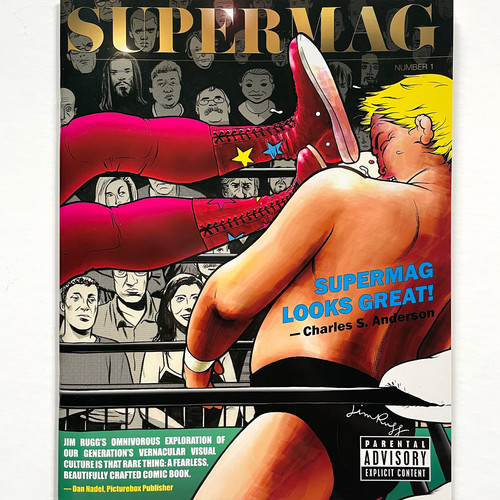
Rugg doubled down on the anthology format with Supermag (AdHouse Books, 2013), a glossy magazine-format collection he describes as an exploration of “narrative collapse”—a term he borrowed from Douglas Rushkoff to describe how we consume media in fragments rather than linear narratives. Part art object, part experimental anthology, Supermag collects Rugg’s best anthology contributions alongside new work, showcasing his range across genre, humor, graphic design, drawing, and typography. “I try to pay attention to my own habits—how I consume media, what I’m visually responding to,” Rugg told Healthy Artists. Supermag was the result: a book you can open on any page and instantly enter Rugg’s world.
Blacklight, Ballpoint, and Beyond
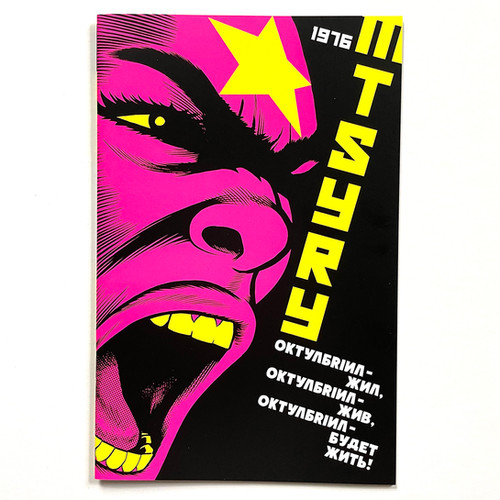
Rugg’s creative restlessness has led him down some truly unexpected paths. In 2020, he launched a wildly successful Kickstarter campaign for Octobriana 1976, a fluorescent blacklight comic book starring the legendary Russian outlaw superheroine Octobriana—a character originally created as Soviet propaganda that escaped to the West and was adopted by underground American cartoonists. Printed with actual fluorescent ink, it’s a cross between ’70s psychedelia and Soviet constructivism, described by Rugg as “samizdat gone wild.” He released both a blacklight edition and a retro-color edition, each one a love letter to the fringe of fringe comics.
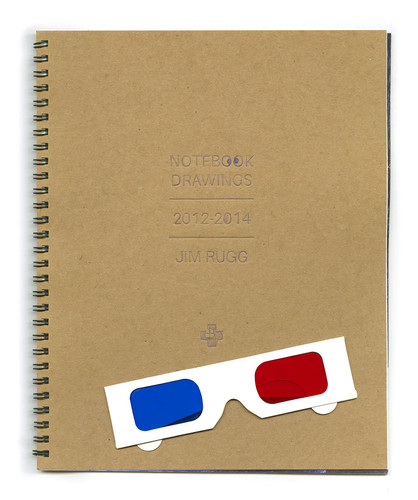
His Notebook Drawings series—two collectible spiral-bound volumes published by AdHouse Books in limited editions of 300—offers an intimate glimpse into Rugg’s creative process. Using only ballpoint pens, he fills notebooks with fan art, movie homages, pinups, cars, animals, 3D experiments, and pop-culture detritus, all rendered with the loose, deceptively casual linework that Juxtapoz called “reminiscent of irreverent high school doodling, only ten times more awesome and sophisticated.” The first volume served as the catalog for his “Notebook Nerd” art exhibition at L.A.’s iam8bit gallery in 2012.
More recently, Rugg launched True Crime Funnies, a comic book series combining his love of true crime with his signature irreverent humor—featuring stories about George Hunter White and the Federal Bureau of Narcotics, pro-wrestling in the Klondike gold rush, and Andy Warhol’s wrestling diary with “The American Dream” Dusty Rhodes. It’s classic Rugg: find the weirdest intersection of pop culture and history, and dive in headfirst.
Educator, YouTuber, and Community Builder
Beyond his printed work, Rugg has made an indelible mark on the comics community through his co-hosting of Cartoonist Kayfabe with the late Ed Piskor. The YouTube channel, which produced over 1,800 videos, became a vital resource for aspiring and working cartoonists alike, deconstructing the craft, business, and history of comics with infectious enthusiasm. Rugg also teaches visual storytelling in the MFA Visual Narrative program at the School of Visual Arts in Manhattan and at the Animation Workshop in Denmark, passing along hard-won knowledge about thumbnails, inking, coloring, and design to the next generation.
Rugg’s comics are part of the permanent collections of the Smithsonian Institution and the National Archives. His Patreon community of over 1,100 members receives exclusive content, process videos, zines, and templates. You can find his full catalog of books, prints, and original art on his website, follow his daily sketch output on Instagram and Twitter/X, or subscribe to his Substack newsletter for ongoing creative dispatches from Pittsburgh.
Perfect for fans of Tom Scioli’s Grand Design series, the DIY energy of early Love and Rockets, Ed Piskor’s Hip Hop Family Tree, and anyone who believes that a ballpoint pen and a blank notebook are still the most powerful tools in comics.
SOURCES
- ▸ Wikipedia - Jim Rugg
- ▸ Image Comics Creator Page
- ▸ The Comics Journal - Jim Rugg Interview (2011)
- ▸ Between the Panels - Jim Rugg Interview (2021)
- ▸ Healthy Artists - Supermag Interview with Jim Rugg
- ▸ CBR - The Supermag Story Interview
- ▸ Publishers Weekly - Afrodisiac Review
- ▸ ComicsAlliance - Afrodisiac Feature
- ▸ Bloomsbury Publishing - Jim Rugg Author Page
- ▸ IndyWeek - Soul Comics: Jim Rugg Discusses Afrodisiac (2010)