Jim Starlin
Legendary writer-artist who created Thanos and the Infinity Gauntlet, and author of creator-owned cosmic epics Dreadstar and Breed
Jim Starlin didn’t just write cosmic comics—he built the genre from scratch. For over five decades, the Detroit-born writer-artist has hurled galaxies at readers and made gods bleed, creating the mythic figures that now anchor the most successful movie franchise in history before retreating to the indie frontier to publish his most personal work on his own terms. Perfect for fans of Jack Kirby’s Fourth World and modern cosmic sagas like Gødland, Starlin is pop culture’s most consequential and least-celebrated architect.
Starlin walked into Marvel in 1972 and immediately began reshaping the company’s cosmic corner. His runs on Captain Marvel and Adam Warlock fused Kirby-esque scale with genuinely heady, philosophical storytelling—and out of them came characters who would define the next half-century of comics: Thanos, Drax the Destroyer, Gamora, Nebula, and Shang-Chi. Publishers Weekly observed that Starlin came “out of nowhere to single-handedly define the genre of the ‘cosmic’ saga,” and his 1982 graphic novel The Death of Captain Marvel remains a landmark of the medium—a superhero story about dying with dignity that still reads as startlingly mature.
That cosmic vision peaked with The Infinity Gauntlet (1991), the six-issue series in which Thanos wields the assembled Infinity Gems to erase half the universe’s life with a thought. It became the direct inspiration for Marvel’s cinematic Avengers saga—The Beat has chronicled how the studio’s blockbuster films are built on Starlin’s pages even as Marvel Comics repeatedly alienated the man who wrote them. At DC, Starlin left an equally indelible mark, scripting the fan-voted death of Robin in Batman: A Death in the Family, writing the Bernie Wrightson-illustrated horror epic Batman: The Cult, and penning the Mike Mignola-drawn space opera Cosmic Odyssey.
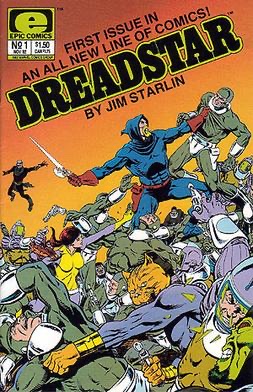
But Starlin’s true artistic home has always been creator-owned comics. In 1982 he introduced Dreadstar in the pages of Epic Illustrated, a space opera chronicling Vanth Dreadstar—the last survivor of the Milky Way, armed with the energy sword Star Blaster—and his crew of misfits (cat-man Oedi, cybernetic telepath Willow, cyborg sorcerer Syzygy Darklock, con man Skeevo) as they wage a two-hundred-year war against the Church of the Instrumentality. Dreadstar ran through Epic Comics, First Comics, and Malibu’s Bravura line, and Publishers Weekly dubbed it “space opera with teeth.”
After an injury to his drawing hand looked set to end his art career for good, Starlin staged one of comics’ great comebacks—with help from inker and co-creator Jaime Jameson, who coaxed him back to the drawing board. The Dreadstar Returns Kickstarter raised $135,000 to publish the first new Dreadstar in thirty years, and the saga continues with Dreadstar vs. The Inevitable, the inaugural release from Monkey Wrench Press, which now distributes the books to comic shops through Dark Horse. Starlin told The Beat that going straight to readers changed everything: “We don’t have to be slaves to either [Disney] or Warner Brothers or whatever.” Read the full interview here.
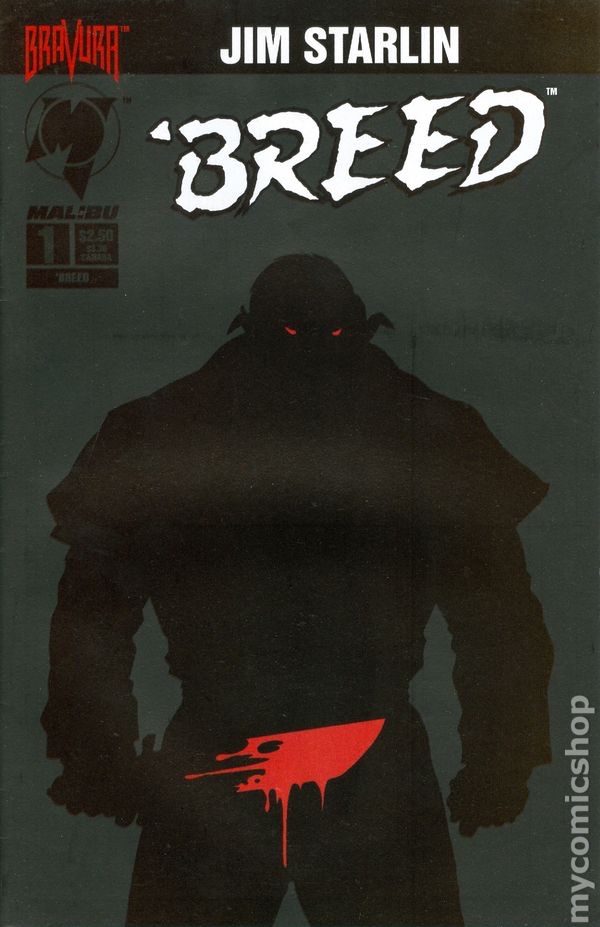
Then there’s Breed—Starlin’s other great creator-owned saga and, by his own admission, his favorite creation. Launched in 1994 through Malibu’s Bravura imprint, it follows Raymond Stoner, a Vietnam vet who discovers he is half demon, and who fights the monstrous forces of Hell across three series and nineteen issues while clinging to his humanity. In a 2024 AIPT interview, Starlin explained that Breed let him explore horror and moral murk that the Comics Code would never have allowed at Marvel. The complete saga is collected for the first time in the Breed Omnibus, a 550-page hardcover crowdfunded on Zoop.
Now 76, Starlin remains a one-man cosmic factory, publishing new Dreadstar adventures through Monkey Wrench Press and selling directly to readers through his official website and crowdfunding platforms. An Inkpot Award winner and Will Eisner Hall of Fame inductee, he stands alongside auteur cartoonists like Tom Scioli as one of the few creators left who write, draw, ink, and color their own sprawling epics. For readers who want cosmic adventure with real philosophical weight, Jim Starlin is the master to discover.