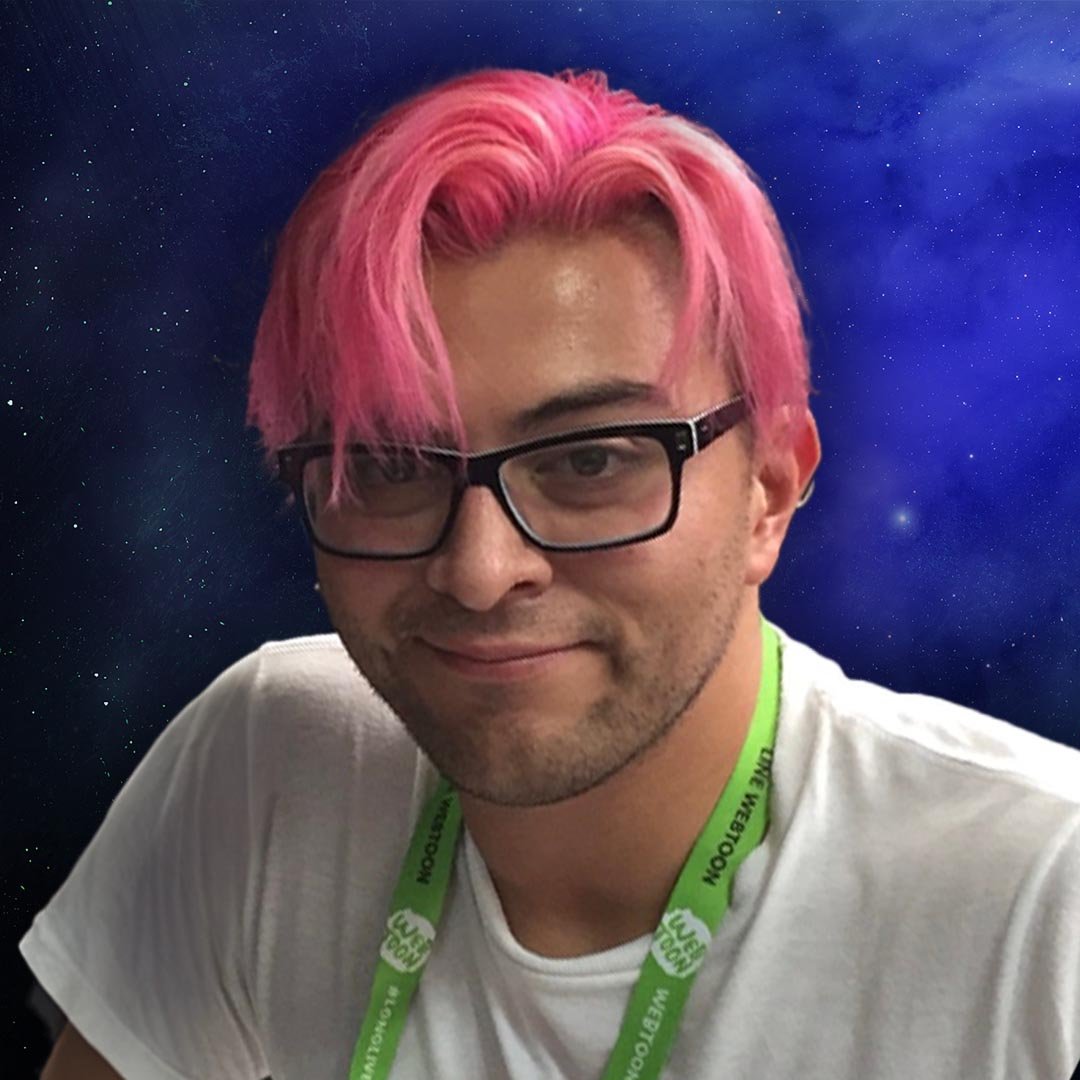
Robbi Rodriguez
Spider-Gwen co-creator and underground-rooted artist who designs iconic characters and brings punk energy to every page.
📍 Portland, Oregon
Robbi Rodriguez draws like he lives—loud, unapologetic, and with a punk-rock disregard for doing things the expected way. The Texas-born, Portland-based artist started self-publishing zines at 18 before breaking into professional comics around 2004 with Hero Camp for Image Comics. Over the next two decades, he’d build a body of work that spans the industry’s biggest stages—Marvel, DC, IDW—while never losing the underground sensibility that made his art feel dangerous and alive.
The character that changed everything was Spider-Gwen. Rodriguez and writer Jason Latour introduced Gwen Stacy as Spider-Woman in Marvel’s Edge of Spider-Verse #2 (2014), and the response was volcanic. What was supposed to be a one-shot turned into an ongoing series, a cultural phenomenon, and eventually a version of the character in Spider-Man: Into the Spider-Verse. Rodriguez designed the now-iconic white-and-pink costume with deliberate minimalism—the hood, the mask, the refusal to sexualize the character in the way superhero comics typically demand. As he told ComicsAlliance, “I wanted to make it as a new one since not really growing up as a superheroes comics fan, I didn’t have the connect with the 616 Gwen. I wanted to use this as an avenue to do what I do best in my indie work and that’s to do comics about independent complex women.”
Before Spider-Gwen made him a household name, Rodriguez had already established himself as a force in creator-owned and independent comics. He illustrated Polly and the Pirates, Resurrection, Stephen Colbert’s Tek Jansen, and the Harvey Award-nominated Maintenance for Oni Press. With writer Simon Oliver, he co-created Collider (later renamed FBP: Federal Bureau of Physics) at DC/Vertigo—a series about a world where the laws of physics occasionally break down, rendered in Rodriguez’s kinetic, slightly unhinged visual style. He later illustrated Zoe Quinn’s Goddess Mode for Vertigo, a cyberpunk magical-girl series that paired his visual inventiveness with Quinn’s sharp writing.
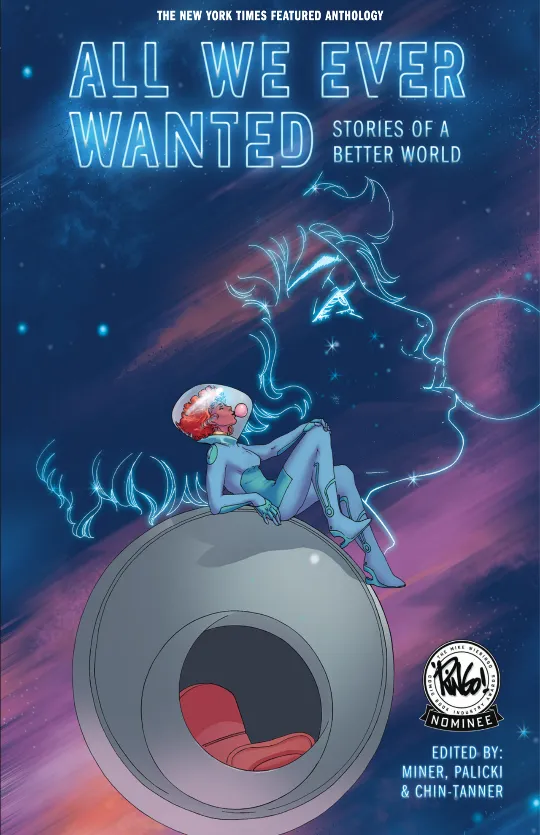
In 2018, Rodriguez contributed art to All We Ever Wanted: Stories of a Better World, the A Wave Blue World anthology edited by Matt Miner, Eric Palicki, and Tyler Chin-Tanner. The collection of 24 sci-fi short stories—later nominated for a Ringo Award for Best Anthology—presented optimistic visions of the future, a counter-narrative to the dystopian fatigue dominating the genre. Rodriguez’s contribution sits alongside work from dozens of top-tier creators in a book The New York Times highlighted as one of the season’s essential comics.
More recently, Rodriguez illustrated Golgotha Motor Mountain for IDW Publishing—a six-issue “hillbilly cosmic sludge southern gothic nightmare” co-written by Lonnie Nadler and Matthew Erman. The series, which debuted in March 2024, follows two meth dealers in Kentucky whose lives spiral into body horror when an interstellar rock crashes through their lab. It’s exactly the kind of visceral, boundary-pushing work Rodriguez thrives on. As he described it to AIPT, “I’ve been a part of some amazing projects over the years but Golgotha Motor Mountain is like nothing I’ve done before. It’s so full of fun and gore that makes my inner twelve year old squeal in joy.”
Throughout his career, Rodriguez has been open about living with keratoconus, a progressive eye disease that has left him legally blind. He was diagnosed in 2008 and has continued working through worsening vision—a challenge he’s addressed with characteristic bluntness in interviews. As he told The Oregonian, he plans to “retire at 40—it’s a good round number to go”—though his prolific output suggests the comics world isn’t done with him yet.
Rodriguez’s creator-owned work includes Frankie Get Your Gun, an acid western webcomic that showcased the raw independent energy he brings to every project. His visual style—rooted in punk zine culture, informed by EC horror comics and Jack Kirby, and executed with a looseness that feels both chaotic and controlled—has made him one of the most distinctive artists working in mainstream comics today. Whether he’s designing a character that becomes a global icon or drawing cosmic body horror for an IDW imprint, Rodriguez brings the same intensity: the work matters, the style is non-negotiable, and the art always comes first.